When “We tried” is not good enough.
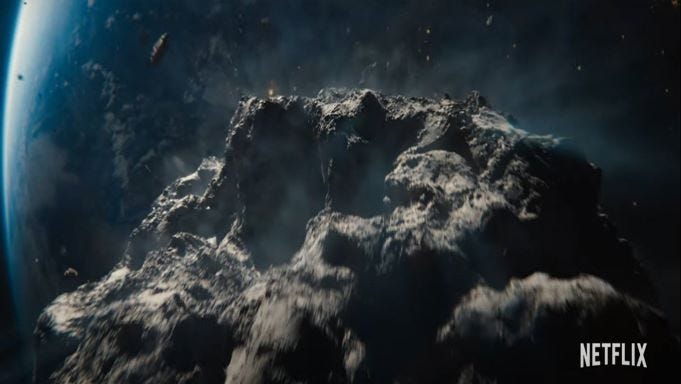
In a way, the asteroid in Netflix’s dark comedy Don’t Look Up absolves everyone of blame — no one caused the asteroid to appear and no one put it on a path towards Earth. Minus blame, we can skip needless recriminations and jump directly to the best plan that averts disaster.

In Don’t Look Up, the absence of blame cannot overcome the powerful social forces that have been long set in motion and that cancel the future.
What are these social forces? Short attention spans and the fixation on minutiae; a perverse focus on celebrity; style over substance; the belief that material things — “stuff” — bring happiness; the unholy superglue that affixes economy to politics; democratic capitalist faith in the corrective power of markets; faith that technology is always progressive; faith that Silicon Valley technologists will engineer a technology to save our planet; myths that Silicon Valley technologists are unbiased engineers instead of what they really are: 21st century versions of 19th century monopoly-seeking robber barons.
These social forces are the structures of society. Like any other structure — the girders of a bridge, the concrete foundations of a building, the deep roots of an old forest — they cannot be simply snipped, cracked, or dug-up. If structures were so easy to transform, radical change would happen all the time. Yet, few things radically change, and, when such change does occur, many groups, especially those who lost more than they wanted, pine for the way things used to be. To build their future they recreate their past. Since their memory of the past is based on myths and misperceptions and an inherently human inability to see the whole of the thing, the disappointed create something new and also imperfect and thus generate new problems and thus sow the seeds for future radical change. And on and on.
Come Together
Disaster does not produce solidarity. Well, not for long.
One hopes that disaster reveals healing bonds long hidden underneath perceived hurts and threats. One hopes that this newfound solidarity would encourage the masses and the elites to rise as one and repel their mutual foe. One hopes that, after the tragedy, we would find common purpose and uncommon resolve to prevent future disasters.
Alas, solidarity-thru-disaster has not been the lesson of the last thirty years’ litany of calamities. In America after 9/11 and in Poland after the Smolensk tragedy of April 2010, the solidarity, filled with hoisted flags and tearful speeches, quickly vanished. In their place arose cultural and political movements built from un-precious stones unearthed long before these tragedies struck. Climate change, ostensibly the film’s uber-allegory, is as unsolved as ever. Today’s Covid-19 pandemic is yet another example of how disaster fails to produce solidarity. Folks who clapped for the weary nurses trudging home from another nightmare hospital shift are the same who refuse to wear masks and get vaccinated.
“We tried.”
Don’t blame the asteroid; blame the response. The politico-opportunists jockeying for favorable position is disastrously myopic. The news media’s similarly myopic focus on current events contributes to the disaster. Even the academic scientists and government bureaucrat-scientists are enamored with minutiae and celebrity. They saw the mutual foe and crawled inward.
No one wants all life on Earth to die and no one wants to be blamed for the apocalypse. Of course, at the end of the world, blame would not matter. There is no solace in being the last man on Earth. There is no one to celebrate the last man. He is not famous because fame requires other people. He is simply alone, for all time — unheralded and de-stuffed.
The Fault in Our Asteroid
Don’t Look Up’s scientists are thrust into the spotlight and woefully inadequate to the task. These relatively powerless naïfs are slowly eaten up by the media and the politics and the economy. They find themselves attacking girders with tin-snips, concrete with plastic shovels, and deep roots with sparklers. “Just doing their job,” perhaps. The scientists have a role, the politicians have a role, and the technologists have a role. If the politicians are corrupt and the technologists are unsurprisingly incompetent, why should the scientists do more? What more could they do? Why should the scientists be blamed, when people in more powerful positions failed to do their part?
Yet, the scientists are a part of society, not apart from it. You are part of society, too. You play your role. That we don’t have the answers to our collective problems is our collective failure. First on the blame list are the powers that be. Further down the list are you and me. But we are all on the list, and if we don’t expect ourselves to do more and differently — if we do not transcend the social forces — then we will be in the midst of an absurd and useless campaign-battle between Just-Look-Uppers and Don’t-Look-Uppers, until the asteroid strikes.
 The Sociology Place