
Japan’s famed film company Studio Ghibli created many modern animated classics. Some have a save-the-environment message, but Pom Poko (1994) is rare in that it is whimsical, grim… and, to my Western mind, weird.
Studio Ghibli’s Nausicaä of the Valley of the Wind (1984) was about the after-effects of environmental disaster. Princess Mononoke (1997) was about stopping an impending environmental disaster. In both, the hero partners with the mysterious forces of nature to stop mechanistic destruction (see also the epic Ewok vs. Storm Trooper battle of Star Wars: Return of the Jedi, 1983).
Enter Pom Poko
The heroes are creatures called Tanuki, translated from the Japanese as “raccoons.” Indeed, they look like racoons: gray and white striped fur, black under the eyes, and sharp claws. Actually, they are a kind of dog, but for the purpose of the film, racoons will do.
The Tanuki/raccoons face an environmental disaster. Tokyo’s population grows and people need housing. The city expands and swallows up surrounding lands, razing hills & felling trees.
The forests are disappearing.
Unfortunately, that’s where the playful racoons live. Where before there was plenty of land and, as such, plenty of food and water and shelter — now there are too many Tanuki and not enough to go around.
Human progress has led to racoon regress.

After first fighting each other, a racoon leader convinces everyone to fight the human incursion, instead.
And here is where things start to get weird.
Had this been some generic Pixar/Sony/other Hollywood film, the animals would band together, with some character building side quests, and be some coming-of-age story or what-have-you. They would cutely repel the human attackers and convince them that the environment is EVERYBODY’S home.
Not Pom Poko. These racoons are no ordinary racoons. For one, they can shape-shift. They can turn into tea pots and statues and even into human beings.

After a year of shape-shifting practice, they feel ready to take on the humans. But there are factions: some just want to scare them away with shape-shifting tricks.
But others want war. They want to hurt the humans who are hurting them.
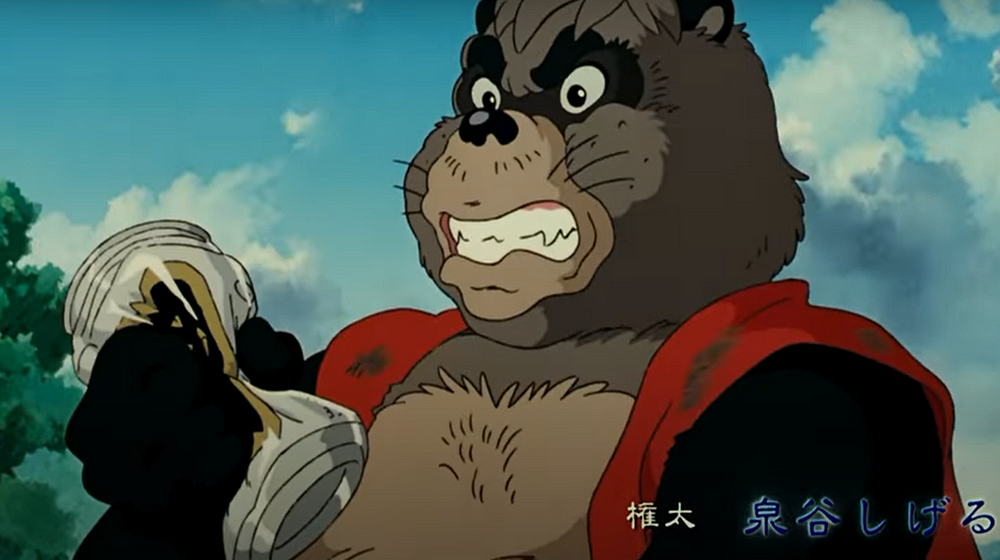
Death ensues. For racoons and for humans. The war does not go well. The racoons like to drink and party after even small victories. Playful by nature, the Tanuki are not war-like and they cannot organize like humans can. Defeats mount. They send for magical reinforcements from Tanuki forest lands in other parts of Japan.
It may not be enough to turn the tide.
This is not a film for small children. Perhaps Pom Poko’s most famous scenes are about male Tanuki’s ability to… well…
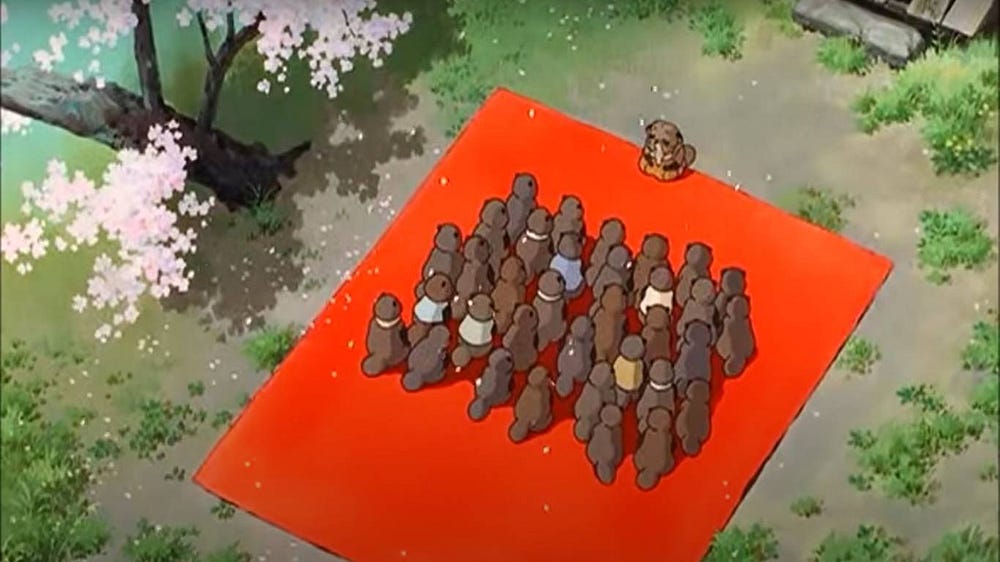
Male Tanuki can stretch, grow, and contort their “racoon pouches” (i.e. balls) into blankets, parachutes, and other shapes. They use this “superpower” to attack the humans.
Overall, a fun, grim, and weird save-the-environment tale.
But, if you are expecting Disney, don’t.

Joshua K. Dubrow is a PhD from The Ohio State University and a Professor of Sociology at the Polish Academy of Sciences.
 The Sociology Place