
From the first frame, fans of The Sopranos already knew what will happen to “Gentleman” Dickie Moltisanti in David Chase’s The Many Saints of Newark, and fans of the mafia films of yore could’ve guessed. We’ve known it since the 1950s, when the Comics Code of Authority cracked down on violence and made sure that all criminals, in the end, get their just desserts. Yet, it still comes as a shock and as a kind of injustice.
Such is the allure of psychopaths. We are enamored by the myths they spin. David Chase created The Sopranos, of which Many Saints is a prequel, to explore the tension between mafia myth-making and its ugly reality.
Myths are a type of hallucination. Mafioso hallucinate. And Chase’s Many Saints may be one long hallucination.
Hallucinations are where someone sees, hears, smells, tastes or feels things that don’t exist outside their mind.
If you read mafia films such as Goodfellas or The Godfather or The Untouchables or The Public Enemy, you read a straightforward story. Sure, timelines can jump around, but the story remains the same: Intrigue, violence, petty theft and grand larceny, gunshots and fistfights and crooked cops and damsels in distress. Jail. Death.
The Sopranos added hallucinations to the genre. In “Funhouse” (Season 2), Tony Soprano, as a result of severe food poisoning, fever dreams sex and confessions. In “From Where to Eternity” (Season 2), Christopher Moltisanti (Dickie’s son) had visions of Hell. He was convinced he would go there. “Soldiers don’t go to Hell,” Tony replied. The first minute of Many Saints may have cleared up that debate.
Hallucinations and fever dreams and visions are part of what sets The Sopranos apart from the rest of the genre. Chase uses hallucinations as a device to glean the inner workings of the psychopathic minds of violent men.
The hallucinations may be a way for the mafioso psychopaths to reconcile the myths that they build for themselves — that they are not killers, but mafia soldiers, that they are not thieves, but businessmen — with the daily truth. Famously, The Sopranos features Tony going to a psychiatrist.
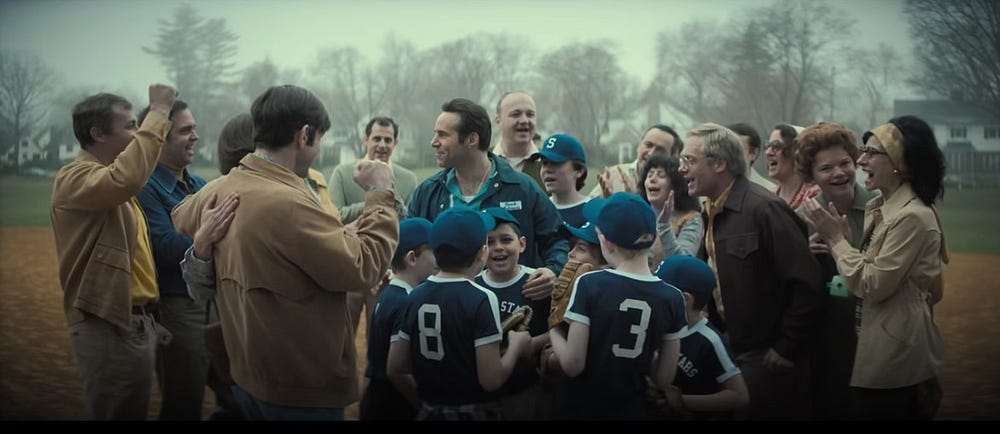
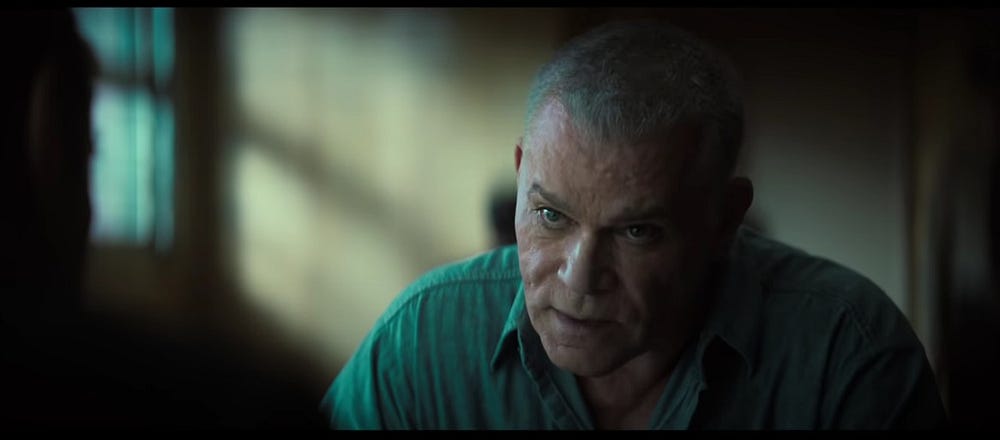
In The Many Saints, Dickie’s father “dies.” Afterward, Dickie visits his Uncle Sal, who is in jail. The uncle’s a dead ringer for his brother, but he’s a twin in looks only. Dickie tells his uncle, “I want to do a good deed.” Dickie, the murderous psychopath that Tony Soprano idolizes, becomes frustrated that his good deeds don’t seem to add up. “Maybe some of the things you choose to do,” his Uncle Sal says, “aren’t God’s favorite.” Dickie did not understand.
But maybe there is no Uncle Sal. Maybe Christopher does not speak from the grave. Maybe all Dickie ever was was a murderous psychopath hellbent on granting his own wishes. Maybe Tony Soprano idolized a myth.
In Chase’s dreamscape, one can never know for sure.
Notes
I left out a lot. There’s a whole subplot about the race riots in Newark. There’s the casual sexism and the homophobia and the racism of the mafia, all presented in the film as is.
Definition of hallucination is from Google.
Some quotes from https://scrapsfromtheloft.com/movies/the-many-saints-of-newark-transcript/
You may be dreaming right now.

Joshua K. Dubrow is a PhD from The Ohio State University and a Professor of Sociology at the Polish Academy of Sciences.
 The Sociology Place